
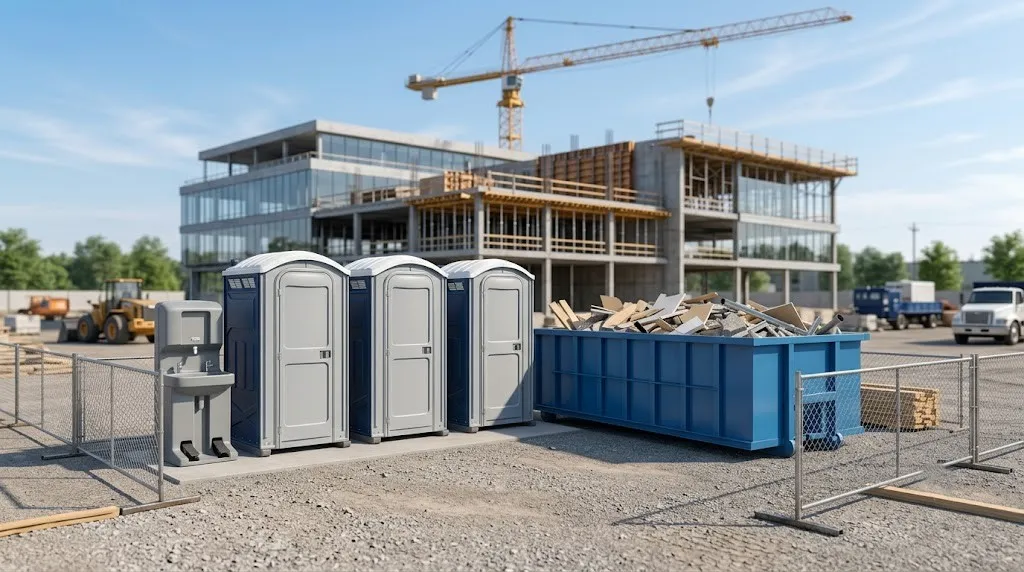
Last updated
What Does OSHA Require for Portable Toilets on a Construction Site?
OSHA 1926.51(c)(1) is the rule that matters: one toilet facility for 20 workers or fewer, then one toilet seat and one urinal per 40 workers as the crew grows past 20, dropping to one per 50 once you cross 200 workers. That number drives everything else on this page, from unit count to delivery scheduling. Separately, 1926.51(a)(1) requires an adequate supply of potable water at the site, which is why a lot of Tempe crews pair handwashing station rental with their toilets instead of treating it as an afterthought. If your crew is painting, coating, or applying herbicides or insecticides, 1926.51(f)(1) kicks in separately and requires washing facilities for that contaminant exposure specifically, not general dirt and dust. Cal OSHA portable toilet requirements for construction follow a similar structure in California, and crews working under either code should size their standard porta potty rental count against the worker total, not against square footage. We get calls from GCs bidding construction portable toilet rental near Texas and construction portable toilet rental near California job sites too, and the ratio math is the same wherever the crew is standing: count heads, apply the table, round up. Our full breakdown lives on the OSHA portable toilet requirements page if you want the ratio spelled out by crew size.
How Many Units Does a Tempe Job Site Actually Need?
Run the OSHA table against your peak headcount, not your average crew size, because peak is what an inspector measures against. A 35-person framing crew needs two units minimum under 1926.51(c)(1); a 15-person punch-list crew clears the threshold with one. Tempe sites downtown often run tighter footprints than a Maricopa Colony lot 14.1 miles north, so placement matters as much as count. We walk that math with every quote, and you can run your own numbers first on how many porta potties do I need. If the crew includes anyone with a mobility limitation, ADA Standards 213.2 requires at least one accessible unit in any cluster, even a two-unit setup, and that unit needs the 60 inch turning circle called for in ADA 304.3.1. Most Tempe general contractors add an ADA accessible porta potty as a standard line item rather than scrambling later. For remote or unpermitted lots, an emergency porta potty rental can land same day. Long-haul jobs, six months or more, usually shift to monthly porta potty rental pricing rather than renewing weekly.
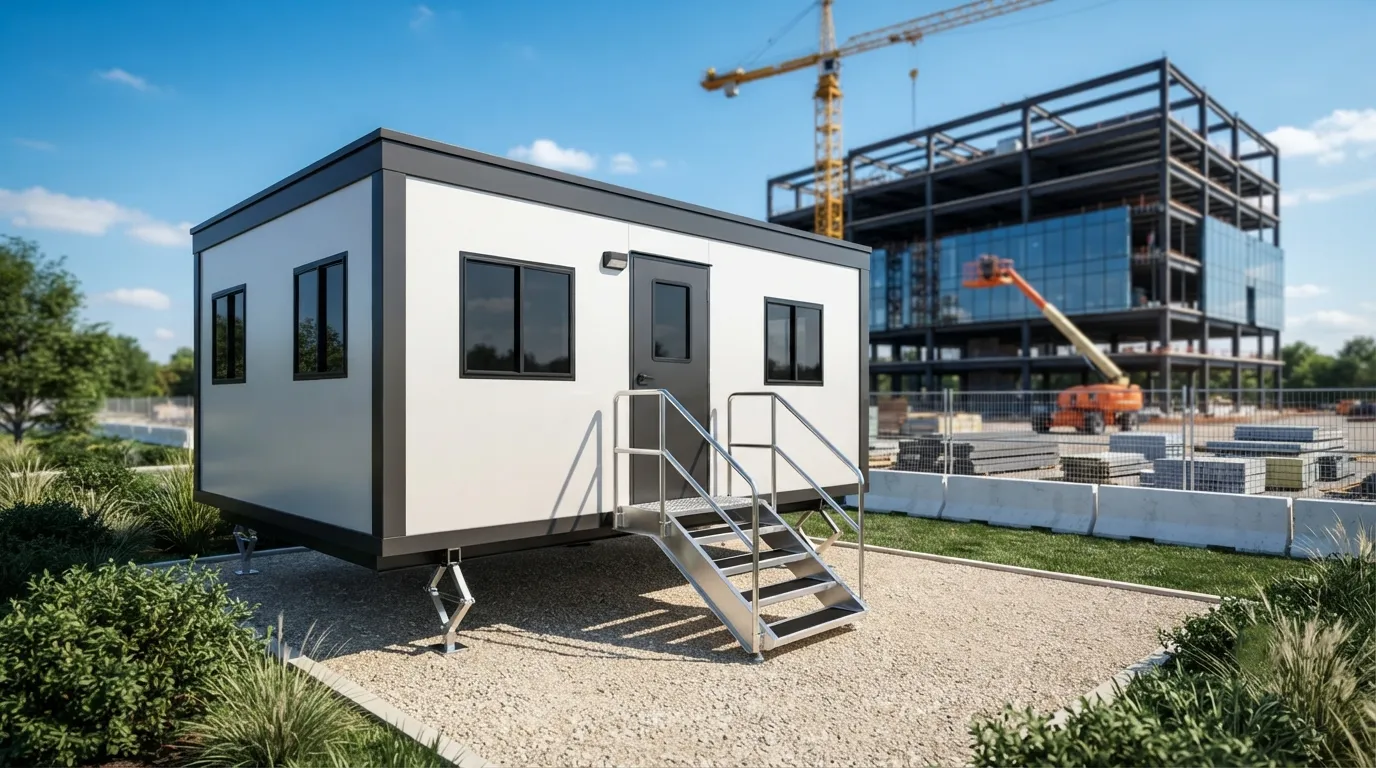
Where Should Units Sit on an Active Job Site?
Firm, level ground near the work zone but clear of truck paths and material staging. ADA Standards 302.1 requires the ground surface under and around an accessible unit to be stable and slip resistant, which rules out loose gravel or soft fill on a lot that's still being graded. Keep a 36 inch clear route to every unit per ADA 403.5.1, and if the unit has a door, know that ADA 404.2.3 sets minimum clear door opening width at 32 inches on accessible models. A standard unit measures about 44 by 48 inches on the ground and stands roughly 92 inches tall, so plan clearance accordingly when siting near scaffolding or a dumpster pad. Speaking of which, most Tempe sites pull a roll-off dumpster rental alongside their toilets, and OSHA 1926.25 requires debris cleared from work areas regularly, so keeping both units accessible from the same haul road saves a lot of walking. If the site also needs perimeter control, temporary fence rental or chain link temporary fence keeps the public off an active grading operation, and barricades still have to meet the ANSI D6.1 standard referenced in OSHA 1926.202.
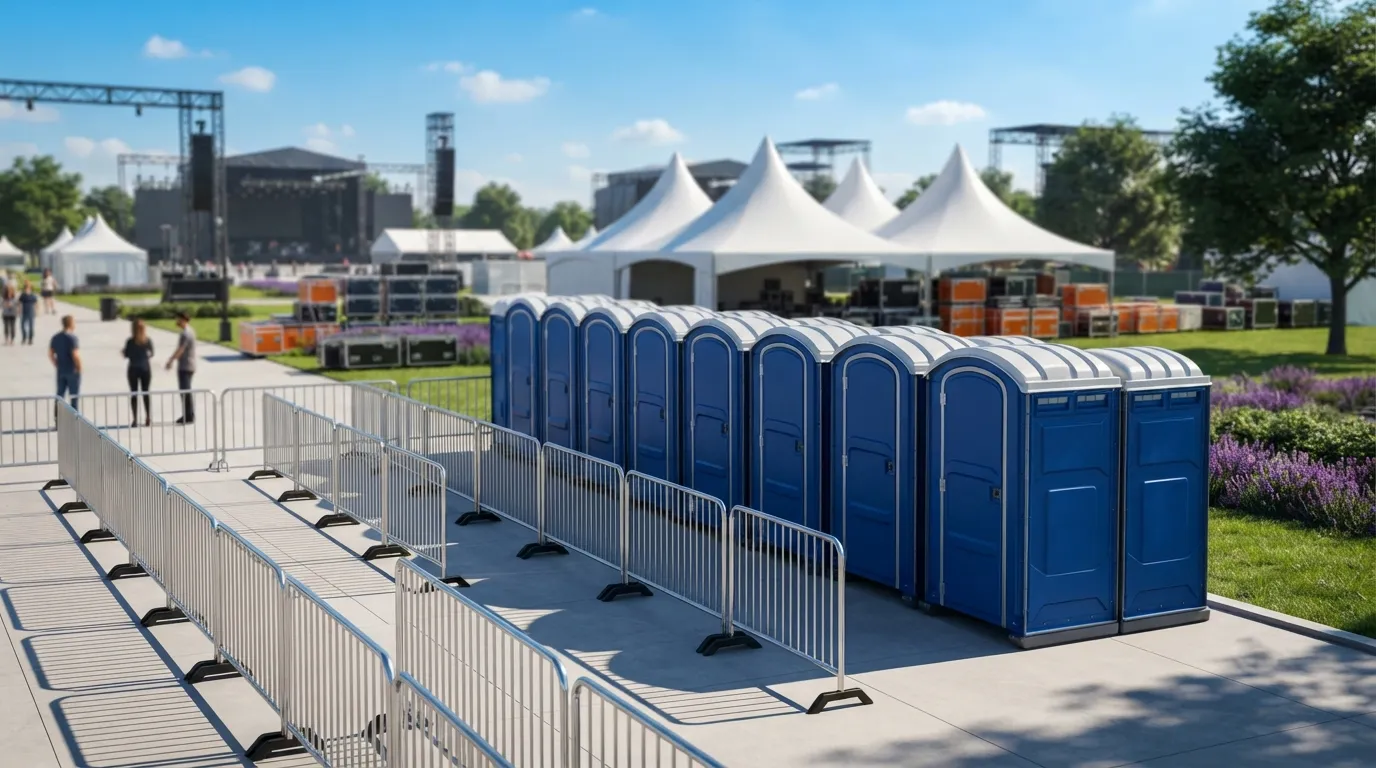
What Does Construction Portable Toilet Rental Cost in Tempe?
| unit | day | week | month |
|---|---|---|---|
| standard | 100 to 350 | 130 to 500 | 125 to 325 |
| ada | 200 to 400 | 120 to 240 | -- |
| deluxe | 85 to 1200 | 150 to 290 | -- |
Delivery adds a separate fee, typically 100 to 500 dollars for a single trip depending on distance and access, with weekly delivery running lower per visit on standing accounts. Service frequency follows ANSI/PSAI Z4.3, which sets a baseline of one pump-and-clean visit per week for up to 10 users across a 40 hour week; busier sites need more frequent service, and we scope that during the walk. Full pricing detail, including what drives the low end versus the high end of that standard range, sits on our porta potty rental cost and porta potty rental per day pages. Sites near Guadalupe, 9.5 miles north of Tempe, or Paradise Valley, 9.7 miles south, generally see the same delivery fee band since both fall inside our standard run.
Do I need a permit for a porta potty on a construction job site in Tempe?
Placement in the public right of way needs confirming with the city before delivery, since permit rules vary by lot and by street. We check this during the quote call rather than guessing. See porta potty permit requirements for what to have ready when you call.
How often do units get serviced on an active construction site?
Weekly is the ANSI/PSAI Z4.3 baseline for up to 10 users across a 40 hour week. Bigger crews or two-shift schedules usually need two visits weekly. We set the interval based on headcount at quote time, not a flat default.
Can I rent just one portable toilet for a small renovation crew?
Yes, a single standard unit covers a crew of 20 or fewer under OSHA 1926.51(c)(1). Most home renovation jobs in Tempe run one unit for the full project. See home renovation porta potty for typical setups.
What size dumpster pairs with a typical construction crew?
Depends on the trade and the debris volume; framing and demo generate more than finish work. Roll-off delivery needs about 60 feet of straight clearance behind the truck. Compare sizes on dumpster sizes and dimensions before you order.
Do I need a handwashing station if I already have a porta potty with hand sanitizer?
No, hand sanitizer alone does not satisfy 29 CFR 1910.141(d)(2), which requires soap and towels or a drying device. A separate handwashing station rental closes that gap on most job sites.
Next step
Get a delivery date
Tell us the address, the dates and the headcount. We size the order and confirm the route.