
Last updated
How many restrooms does a race need?
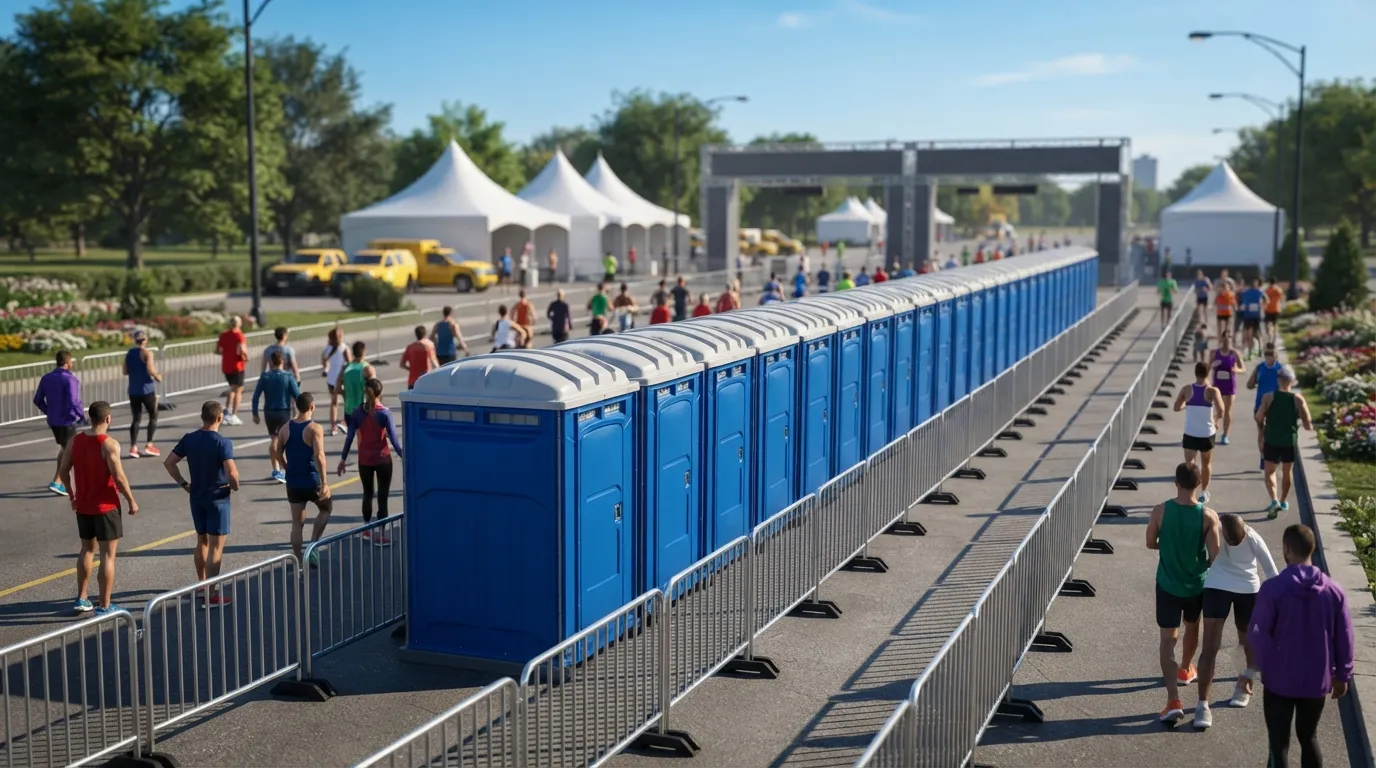
Start with the corral, not the course. A finish line where runners bunch up for an hour needs more units than a water stop where people pass through in seconds. How Many Porta Potties Do I Need walks through the math, but for races specifically, cluster your units at the start corral, at major aid stations, and at the finish festival, since that is where people actually wait. OSHA 1926.51(c) sets construction-site ratios, not race-day ones, but race directors in Tempe often use it as a rough floor and then add units for spectators and volunteers. A typical standard porta potty rental runs on a weekend rate for race-day events, and ADA-compliant units belong in that mix too. ADA Standards section 213.2 requires at least 5 percent of a cluster to be accessible, never fewer than one unit, so a bank of twenty units needs at least one ADA stall. Check ADA Accessible Porta Potty for what that unit includes, and lean on Marathon and Race Restrooms in Tempe, AZ planning support if your course crosses multiple municipal boundaries. Races that draw runners from Guadalupe, 3.5 miles southwest, or stretch toward Paradise Valley, 15.8 miles north, sometimes need units staged at both ends of a point-to-point course, not just the finish.
Where should race restrooms go on the course?
Placement decides whether restrooms actually get used or just get walked past. Set units where the crowd naturally slows down: aid stations, corrals, and any spot where a course loops back near itself. Porta Potty Placement Guide covers ground clearance and door swing, both of which matter more at a race than a construction site because you have runners in a hurry, not workers on a schedule. A standard unit needs a stable, level pad, and ADA Standards section 302.1 calls for surfaces that are stable, firm and slip resistant, which matters on grass infields and gravel lots common at Tempe race venues. Leave clearance for service trucks too; a Roll-Off Dumpster Rental or restroom pump-out truck needs real room to maneuver, and if you are staging a restroom trailer rental instead of standalone units, the trailer itself needs a level, accessible approach with a ramp no steeper than 1:12 per ADA Standards section 405.2. If your race also needs lighting before dawn starts or after dusk finishes, a Light Tower Rental pairs naturally with restroom placement near the start line. Races that run generators for timing equipment or PA systems should also plan for how to brace a temporary power pole if the course crosses open ground, since an unbraced pole near a runner corridor is a hazard nobody wants on race morning; pair that with a Temporary Power Pole setup reviewed ahead of time.
Should a marathon rent trailers or standard units?
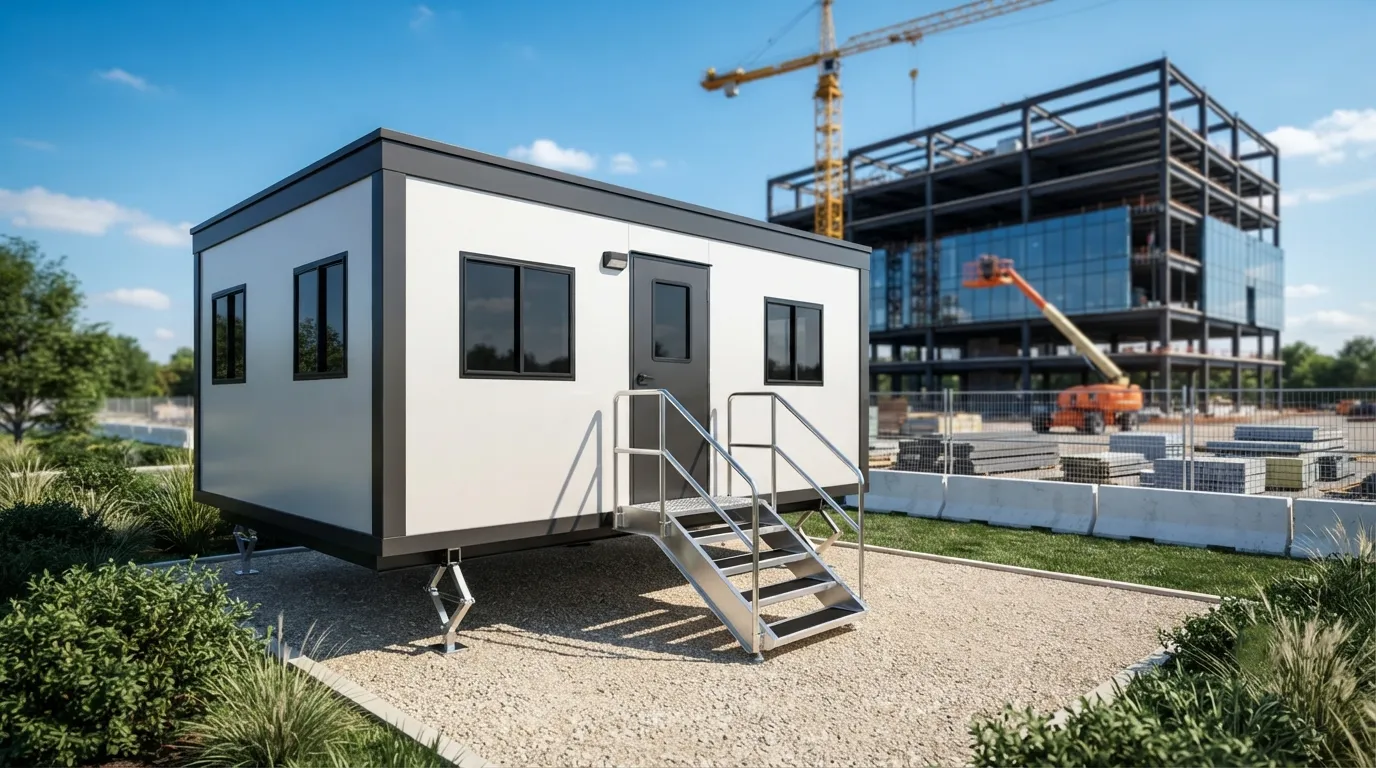
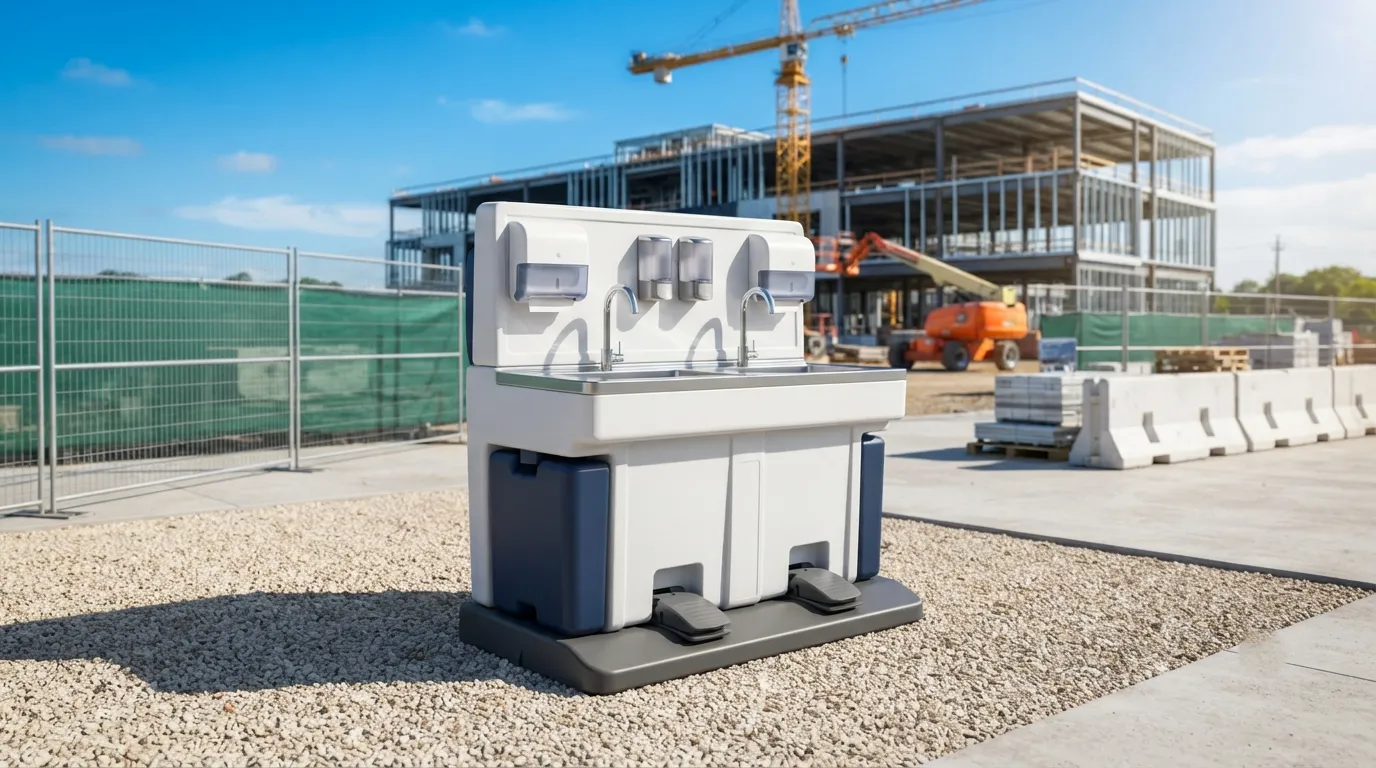
Standard units cover aid stations and corrals; trailers make sense for finish festivals with sponsors, VIP tents, or a beer garden. A 2 Stall Restroom Trailer or 4 Stall Restroom Trailer gives runners and spectators a flushing option with running water, which matters for longer festival hours after the race clock stops. Larger races with an 8 Stall Restroom Trailer handle bigger finish-line crowds without a line snaking past the merchandise tent. Handwashing matters here too: 29 CFR 1910.141(d)(2) requires soap and towels or a hand-drying device, not just sanitizer, so pair any unit bank with a Handwashing Station Rental rather than relying on gel alone. If your race includes a post-run meal or food trucks, Grease Trap Pumping and general Septic Pumping Service keep vendor operations running clean through the finish festival. Tempe races that draw from Sun Lakes, 16.9 miles south, or Goodyear Village, 19.0 miles south, sometimes stage satellite unit clusters at shuttle drop points, which is really a Portable Restroom Rental logistics question more than a restroom-count one.
Do I need a permit for race-day restrooms in Tempe?
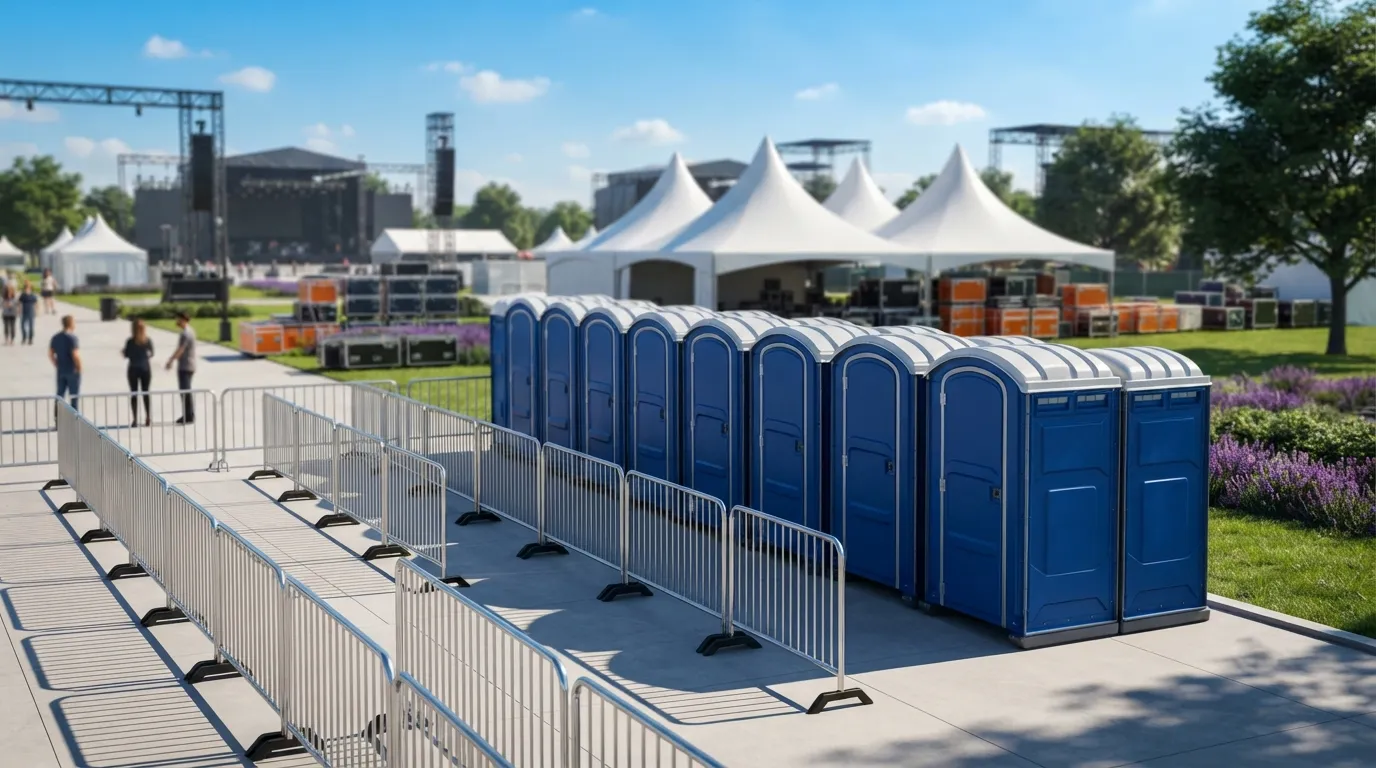
Placement in a public right of way or city park needs confirming with the City of Tempe before race day. Permit rules vary by venue and course route, so check with the city directly rather than assuming last year's approval carries over; see Porta Potty Permit Requirements for the general process to expect.
How far in advance should I book race restrooms?
Book as soon as your course map and expected runner count are set, ideally weeks out for larger races. Units, trailers, and delivery trucks all need scheduling, and popular race weekends compete for the same inventory across Tempe.
Can restrooms be moved along the course after setup?
Standard units can be relocated before race day if your course changes, but not mid-event. Plan final placement once your corral layout and aid station map are locked, then confirm with Request a Quote.
What is the difference between race restrooms and construction site units?
Construction units follow steady, dispersed use over shift hours. Race restrooms face sharp spikes at the start corral and finish line, so placement and unit count depend more on crowd flow than worker headcount.
Do we need ADA units for a race?
Yes. ADA Standards section 213.2 requires at least one accessible unit in any cluster, and races with spectators and volunteers of varying mobility should plan for more than the bare minimum.
How do handwashing stations work at a finish festival?
They pair with restroom clusters near food vendors and medical tents. 29 CFR 1910.141(d)(2) requires soap and a drying method, so a simple sanitizer stand alone will not meet that standard.
Next step
Get a delivery date
Tell us the address, the dates and the headcount. We size the order and confirm the route.