
Last updated
How many restrooms does a film set need?
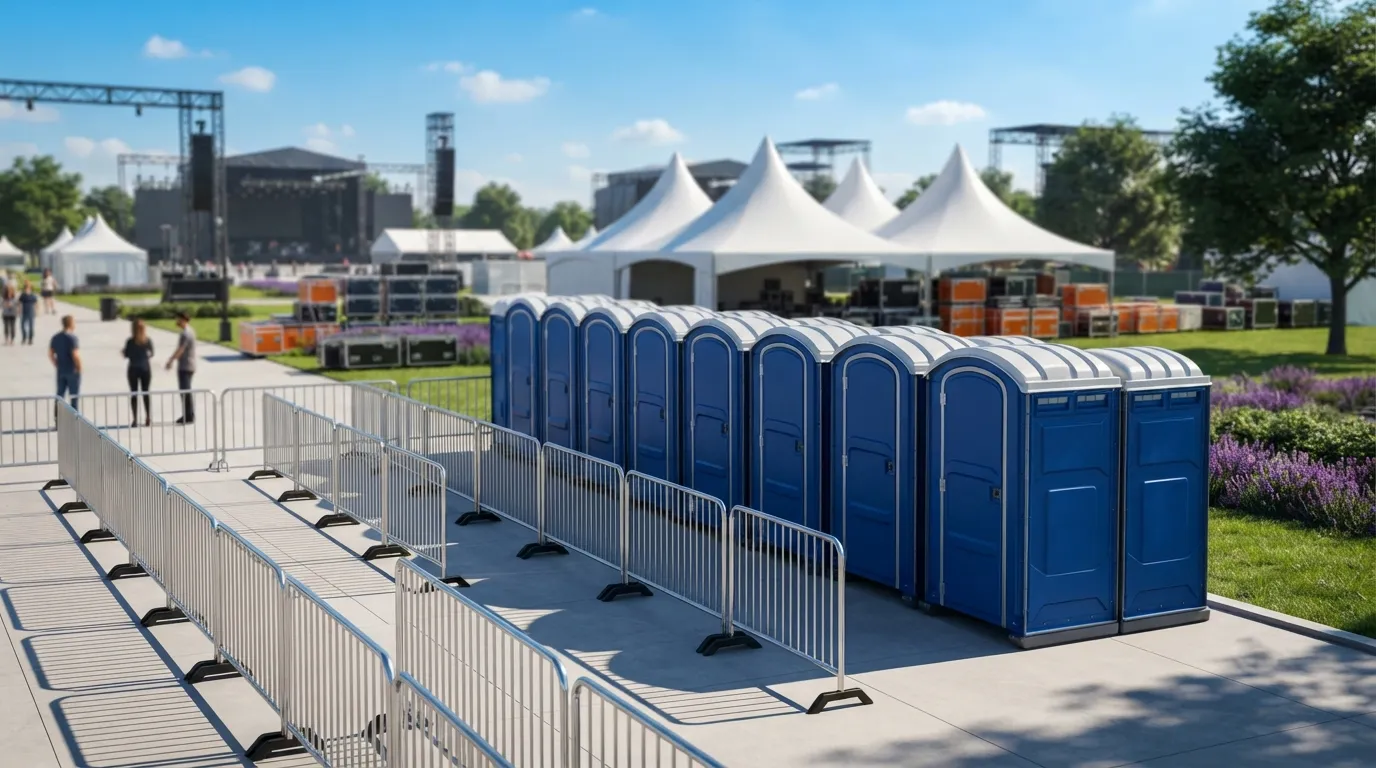
OSHA 1926.51(c) sets the baseline most productions use to plan crew facilities: one toilet for every 20 workers on site, moving to a ratio of one seat and one urinal per 40 once headcount passes that mark. A 30-person crew working a Tempe location for a week generally needs two to three units minimum, more if the shoot involves background talent or a public-facing scene. Line producers usually split the count between portable toilet rental units for the general crew and something quieter near base camp for cast. Tempe Porta Pros sets units away from boom mic range and behind existing structures when the lot allows it, which keeps ambient noise off the sound mixer's track. If the production needs power for lighting, monitors or a portable generator rental film setup near video village, that gets staged separate from the restroom cluster so generator hum doesn't bleed into dialogue takes. For crews over 40, check the OSHA portable toilet requirements guide before locking the unit count, and use the how many porta potties do I need page to run the math against your actual call sheet numbers.
Cast trailers and honeywagons often travel with their own facilities, but background talent and crew still need standalone units. A porta john rental works fine for grip and electric; wardrobe and cast usually get something upgraded.
| unit | day | week | month |
|---|---|---|---|
| standard | $100 - $350 | $130 - $500 | $125 - $325 |
| deluxe | $85 - $1,200 | $150 - $290 | - |
| ada | $200 - $400 | $240 - $400 | - |
Can a restroom trailer work on a film location?
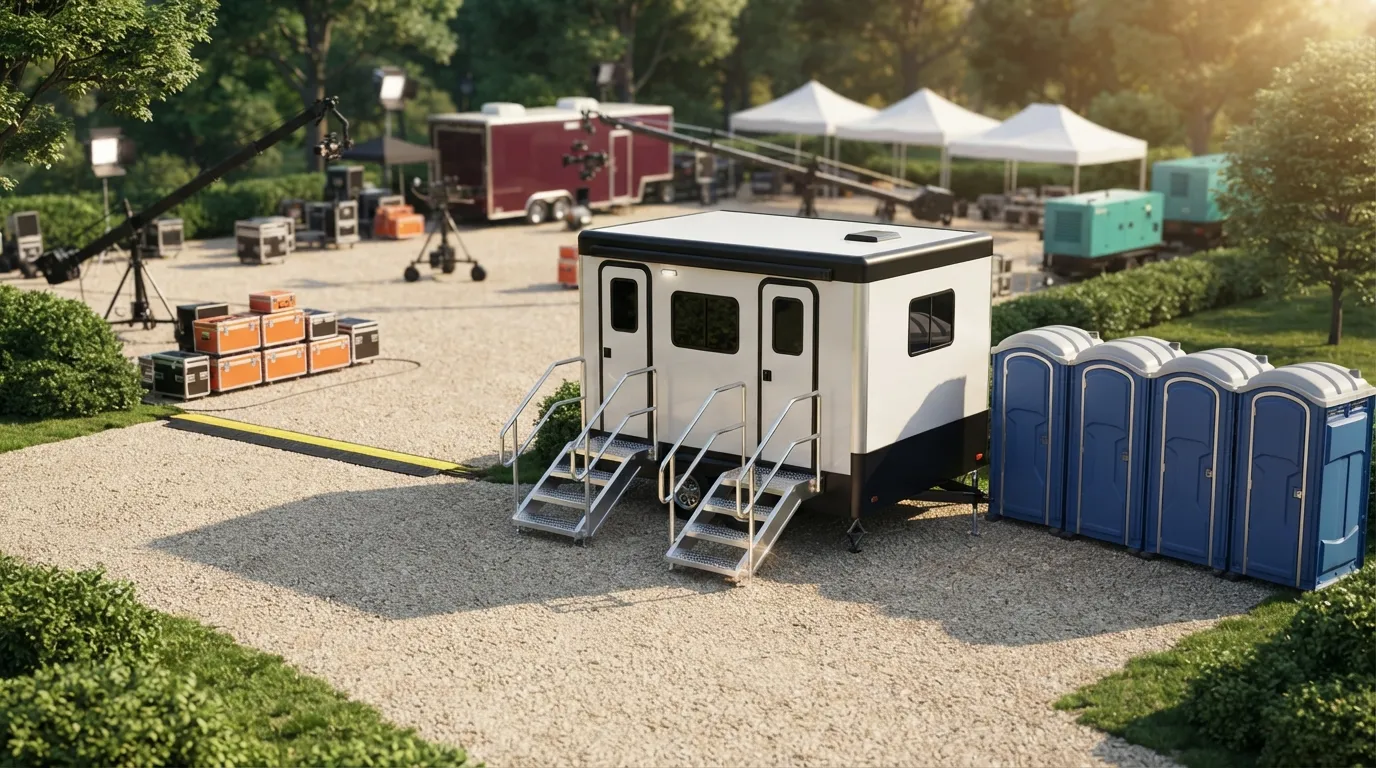
Yes, and most multi-day shoots in Tempe request one once the schedule runs past a single afternoon. A 2 stall restroom trailer handles a mid-size crew, while an 8 stall restroom trailer suits a larger production or a location with both cast and extras on site. Trailer day rates fall between $175 and $2,500 depending on size and finish level, with weekly rentals landing around $1,397 typical for longer shoots. A luxury restroom trailer is common for cast on higher-budget productions, and it draws power the same way lighting and camera village does, so coordinate placement with your gaffer if you're also running a temporary power pole or generator on set. Trailers need level, stable ground; ADA Standards 302.1 calls for surfaces that are stable, firm and slip resistant, which matters on gravel lots or dirt locations common around Tempe's industrial and desert-edge filming spots. If the location sits near Guadalupe, 3.5 miles southwest of central Tempe, or extends toward Paradise Valley, 15.8 miles north, delivery logistics change slightly and it's worth confirming drive time when booking. Check restroom trailer rental cost for a fuller breakdown before you commit to a size.
Does a film shoot need an ADA-accessible unit?
If crew or cast members require one, yes, and productions with any public component should plan for it regardless. ADA Standards 213.2 requires that where portable toilets are clustered, at least 5 percent be accessible, with a minimum of one unit no matter how small the cluster. An ADA accessible porta potty has a wider door and interior turning space; ADA Standards 404.2.3 sets minimum clear door width at 32 inches, and ADA Standards 304.3.1 calls for a 60 inch turning circle inside accessible units. Locations department heads on Tempe shoots should build this into the base camp layout from the start rather than adding it after crew complaints. Pair the accessible unit with a handwashing station rental nearby; 29 CFR 1910.141(d)(2) requires soap and towels or a hand-drying device at wash stations, and hand sanitizer alone doesn't satisfy it. Productions using paint, aerosol coatings or practical effects with solvents should also review OSHA 1926.51(f)(1), which requires washing facilities specifically where paints, coatings or other harmful contaminants are in use on set. For a full site plan, the porta potty placement guide covers spacing and access routes crews often overlook.
How far in advance should a production book restrooms?
Book as soon as the location is locked, ideally one to two weeks out for multi-day shoots. Same-day and next-day service is often possible for smaller add-on units, but trailers and ADA units book faster during festival season. Use request a quote once your crew count is set.
What does a film crew restroom rental cost for a single day shoot?
A single day with a handful of standard units typically runs in the $100 to $350 per-unit range, with delivery fees layered on separately. See porta potty rental per day for a fuller cost breakdown by crew size.
Do portable restrooms need to be serviced during a multi-week shoot?
Yes. Industry standard under ANSI/PSAI Z4.3 calls for weekly service on units seeing regular use, though heavy-traffic sets often need more frequent visits. Ask about a service schedule when you book through portable restroom rental.
Can restrooms be placed on a residential street for a location shoot?
Placement in the public right of way needs confirming with the City of Tempe before delivery. Production coordinators should check this early since street closures or parking permits often apply. See porta potty permit requirements for what to ask about.
What's the difference between a porta potty and a restroom trailer for cast use?
A standard unit is a single stall, about 44 by 48 inches on the ground, with a 60 to 70 gallon tank. A trailer offers multiple stalls, sinks and often climate control, better suited to principal cast. Compare both on event restroom rental.
Next step
Get a delivery date
Tell us the address, the dates and the headcount. We size the order and confirm the route.