
Last updated
How Do Porta Potties Work?
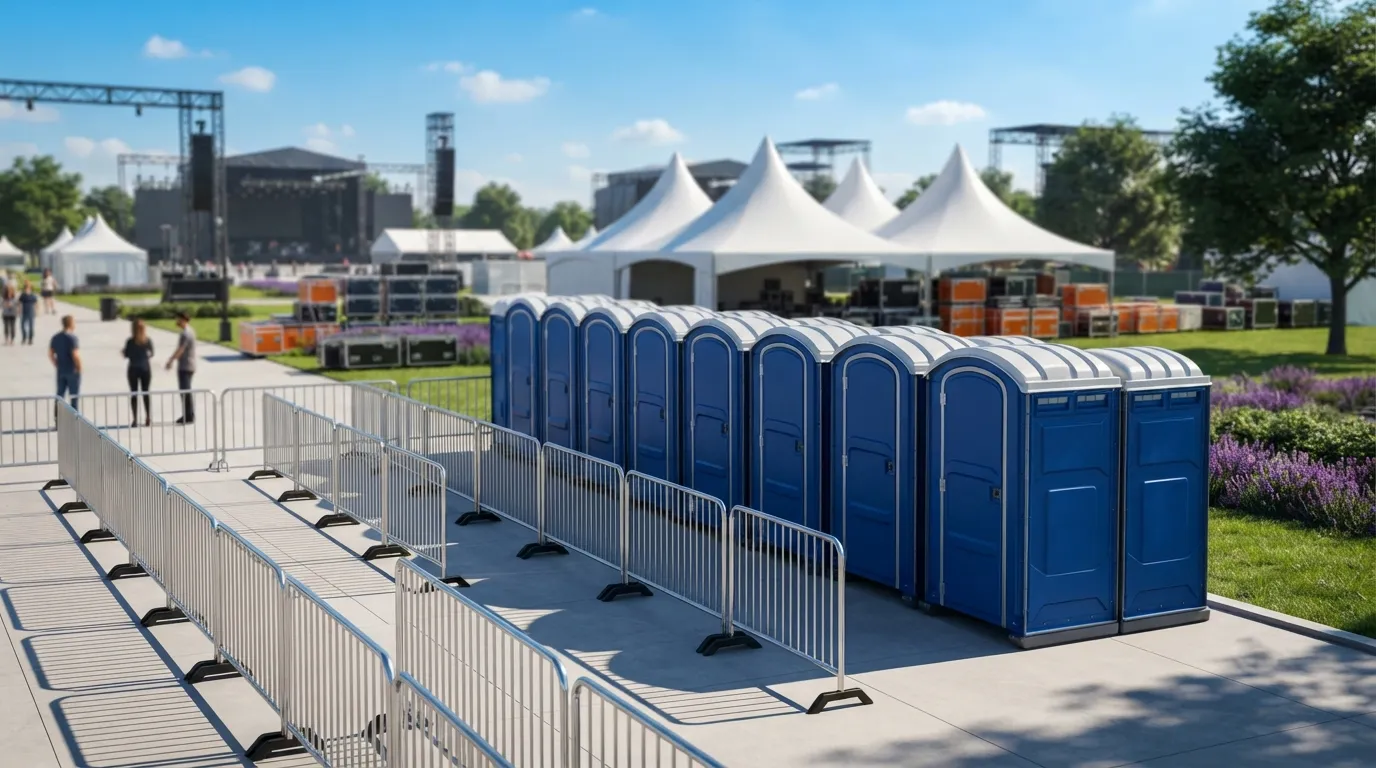
Under the seat sits a holding tank, typically 60 to 70 gallons, built into a unit that measures about 44 by 48 inches on the ground and stands roughly 92 inches tall. There's no flush, no water line. Waste drops straight into the tank, where a blue or green chemical treatment breaks down solids and knocks back odor between services. That's the basic setup whether you're renting a standard porta potty rental for a job site or a single unit for a backyard party. A service tech shows up, vacuums the tank through a hose, refills the chemical charge, and restocks paper. ANSI/PSAI Z4.3, the industry standard for portable sanitation, sets one visit a week as the baseline for up to 10 users over a 40 hour week. Heavier use in Tempe means more frequent stops. If you're not sure how many units your crew needs, the how many porta potties do i need guide walks through headcounts and duration.
How Does a Flushable Porta Potty Work?
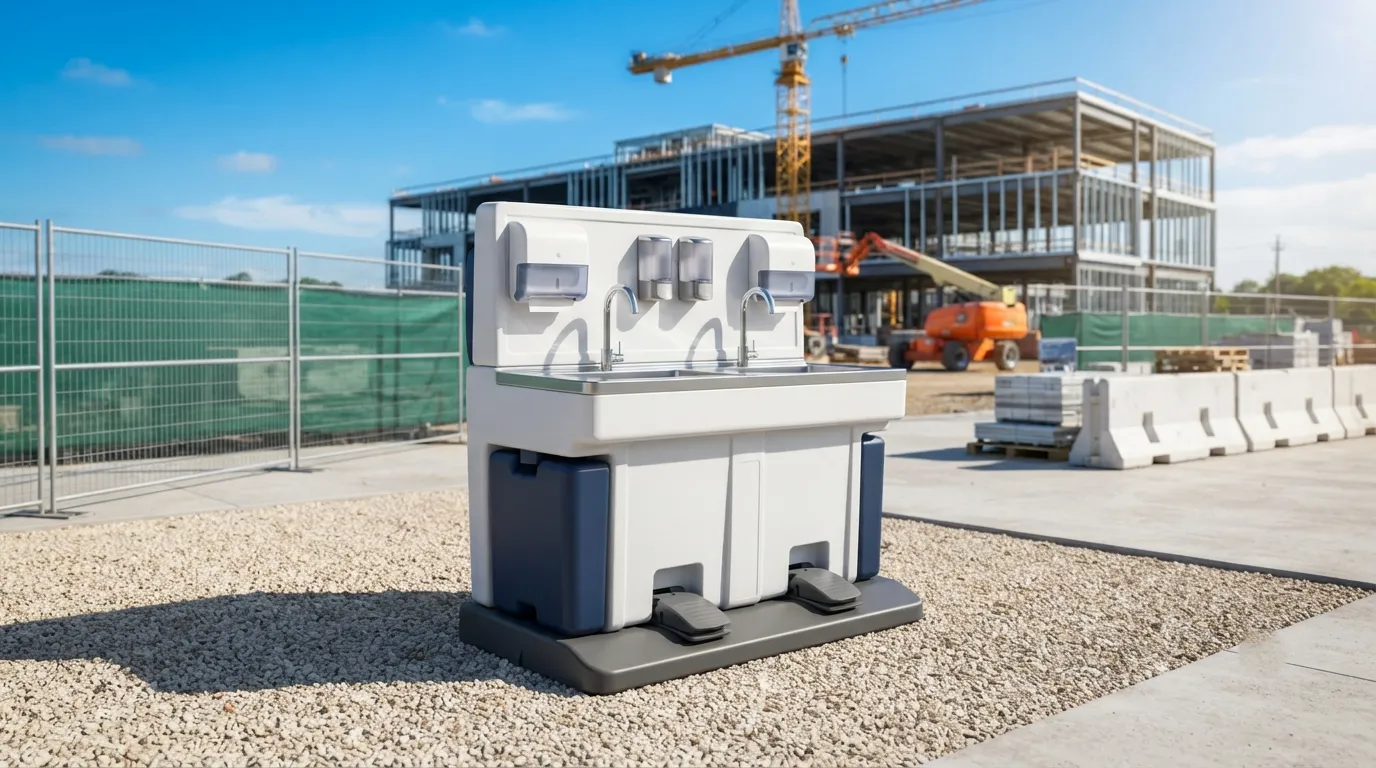
A flushable unit, sometimes called deluxe, adds a small onboard freshwater tank and a foot pump or pedal that pushes a rinse through the bowl into the holding tank below. It's still not tied to sewer or city water. Everything stays self-contained until the tank is pumped. These units run larger and pricier than a standard, and they're the right call for weddings or office sites where people expect something closer to indoor plumbing. Check deluxe flushable porta potty for specs. A portable sink works the same self-contained way: a foot pump draws from a fresh water reservoir, and greywater drains into a separate tank underneath, satisfying the soap-and-towel requirement in 29 CFR 1910.141(d)(2) without a hookup. See portable sink rental for handwashing setups that pair with your restroom order. On a construction site, a worker walking to a porta potty during a break expects the same basic function as at home: seat, paper, ventilation, and a chemical treatment doing the odor control work behind the scenes.
What Chemicals Go in a Porta Potty?
The blue liquid in the tank is a deodorizing and bacteria-slowing treatment, not a cleaner for the outside of the unit. It's dosed at each service visit based on tank size and usage. People searching "portable toilet chemicals near me" are usually maintenance crews or campers refilling a unit themselves; a home unit for camping porta potty use needs the same chemical charge as a job site unit, just less often since fewer people use it. This is separate from septic tank cleaning chemicals, which treat a fixed underground tank rather than a portable one. If you're running a residential septic system in Tempe, a 1,000 gallon tank is typically pumped every 3 to 5 years depending on household size, per standard guidance on tank service life. That's a different service entirely. Tempe Porta Pros handles both: portable units through portable toilet rental and tank service through septic pumping service, but don't mix chemical types between the two systems.
Are Porta Potties ADA Accessible?
Some are, and the accessible ones are bigger and built to specific dimensions. An ADA unit needs a 60 inch turning circle inside per ADA Standards 304.3.1, a door opening at least 32 inches wide per ADA Standards 404.2.3, and a route to reach it that's at least 36 inches clear under ADA Standards 403.5.1. Grab bars and interior fixtures fall inside the 15 to 48 inch forward reach range set by ADA Standards 308.2.1. Where standard units are clustered on a site, ADA Standards 213.2 requires at least 5 percent to be accessible, with a minimum of one no matter how small the cluster. On a construction job in Tempe, OSHA 1926.51(c) sets the toilet ratio itself: one facility for 20 workers or fewer, scaling up from there. Rent through ada accessible porta potty and pair it with standard units sized to your crew, guided by the ratios in osha portable toilet requirements.
Pricing at a Glance
| unit | day | week | month |
|---|---|---|---|
| standard | $100-$350 | $130-$500 | $125-$325 |
| deluxe | $85-$1200 | $150-$290 | -- |
| ada | $200-$400 | $185-$240 | -- |
Full breakdowns live at porta potty rental cost, porta potty rental per day, and monthly porta potty rental. A delivery fee applies on top and depends on distance; Tempe Porta Pros routes trucks daily through the city and out to Guadalupe, 3.5 miles southwest.
How often does a porta potty get pumped?
Weekly is the baseline under ANSI/PSAI Z4.3 for typical use. Job sites with more workers or events with heavy foot traffic need more frequent pump-outs. Tempe Porta Pros schedules based on headcount and duration, not a flat calendar.
Do porta potties smell?
Less than people expect when serviced on schedule. The chemical treatment controls odor between visits, and ventilation stacks vent gas above head height. See do porta potties smell for what drives smell up or down.
Can I rent a porta potty for a single weekend?
Yes. Standard units run in a weekend rate separate from the daily and weekly figures, and it's built for exactly this use: a Saturday event, a garage sale, a backyard gathering in Tempe.
What's the difference between a porta potty and a portable restroom trailer?
A porta potty is a single self-contained unit with no plumbing. A restroom trailer rental has multiple stalls, running water, and often climate control, built for weddings or larger events needing more capacity.
Do I need a permit to place a porta potty in Tempe?
Placement in the public right of way needs confirming with the city before delivery. For anything on private property tied to construction, check porta potty permit requirements or dumpster permit requirements if you're also renting a roll-off.
Next step
Get a delivery date
Tell us the address, the dates and the headcount. We size the order and confirm the route.